Custom Anime Character Bento Boxes at Scale: A Sourcing Evaluation Checklist from Sampling to Mass Production
A bulk sourcing guide to anime character bento boxes for the US, Japan, UK, Canada, and Australia: how to define requirements, screen custom anime food-art manufacturers, verify sampling and mass-production consistency, and avoid IP licensing and food-contact compliance risks.
Start by Defining What You Are Actually Buying
In a sourcing context, "anime character bento box" refers to at least three different product types, and each has different supplier capabilities, compliance paths, and acceptance criteria. Separate the categories first, then discuss pricing and MOQ — this saves a great deal of back-and-forth.
- Food-contact container type: The bento box itself directly contacts food and must be assessed under the food-contact material regulations of the target market. The supplier needs to provide material declarations and test reports.
- Packaging gift-box type: The bento box serves as outer packaging or a storage container, with separately packaged snacks inside. The focus is structural strength, printing, and drop performance in transit.
- Collectible merchandise type: Centered on character styling, open-and-close structures, or collectible appeal; it may not directly contact food. The focus is sculpt accuracy and coating consistency.
A common mistake buyers make is mixing all three types of requirements into one RFQ, which results in quotes based on different scopes that cannot be compared side by side. Mark the product category clearly at the RFQ stage and ask suppliers to quote on the same basis.
Screening Suppliers: Check Qualification Boundaries Before Design Capability
A custom anime food-art manufacturer's core capabilities fall into two layers: compliance and manufacturing are the baseline, while character visual fidelity is a plus. Screen in the following order to avoid being swayed by polished case photos.
Four Items That Must Be Confirmed in Writing
- Food-contact compliance: Clarify whether the product contacts food, which parts contact food, and the types of test reports available and the issuing bodies. Different markets have different requirements for migratables, heavy metals, and plasticizers, so confirm per destination country.
- IP licensing scope: Whether the supplier holds licensing rights to the relevant IP, which product categories and sales territories the license covers, and when it expires. A license that does not cover your sales market is the most easily overlooked risk.
- Capacity and lead-time basis: Whether capacity is stated as monthly capacity or monthly capacity for that specific category, and whether lead time covers sampling, tooling, printing, and assembly.
- Allocation of quality responsibility: Who is responsible at the incoming material, production process, and outbound stages, and how non-conforming batches are handled.
Capabilities You Need to Assess with Physical Samples, Not Photos
Character fidelity, color deviation control, and print detail cannot be evaluated from photos or renders. Ask suppliers to send existing samples in the same material and process rather than retouched images only. If a supplier cannot provide any physical sample, downgrade the evaluation immediately.
Sampling Stage: Put Acceptance Criteria into the Sample Approval Form
Sampling is not about taking a look and deciding whether it looks good; it is about converting subjective judgment into verifiable terms. The sample approval form should cover at least the following fields, signed by both parties, and serve as the basis for mass-production acceptance.
| Item to Confirm | What to Record | Why It Matters |
|---|---|---|
| Color | Color standard, tolerance range, reference light source | The same color standard looks different under different light sources; without an agreed light source, disputes are likely |
| Dimensions | Key dimensions and tolerances | Affects assembly, stacking, and carton packing efficiency |
| Material | Material name, description of food-contact parts | Directly tied to compliance declarations and test items |
| Printing | Artwork placement, registration accuracy, surface treatment | Character details are most likely to be distorted in bulk printing |
| Structure | Opening/closing method, latch force, seal integrity (if applicable) | Determines real-world user experience and return rates |
| Packaging | Individual packaging, inserts, master carton specifications | Affects cross-border damage rates and warehousing costs |
After the sample is approved, keep a sealed golden sample and define the retention period. If a dispute arises during mass production, the sealed sample is the only physical reference both parties can share.
IP Licensing vs. Original Design: Two Paths with Different Cost Structures
Anime-themed products inevitably involve licensing. Buyers generally have two paths, and the choice depends on brand positioning and budget structure rather than unit price alone.
- Licensed IP path: The visuals carry built-in traffic, but licensing fees, territory restrictions, approval cycles, and asset guidelines all affect total cost and launch timing. Suited to brands with defined sales channels and a promotion budget.
- Original character path: No licensing fees or territory restrictions, but you bear the cost of character design and market education yourself. Suited to buyers looking to build long-term proprietary brand assets.
Note that even if a supplier claims to be licensed, buyers should still review the category and territory clauses in the license documents. A license that covers toys but not food packaging is a common mismatch.
Assembly Logic in Anime-Themed Food Gift Box Wholesale
When the bento box is sold as part of a gift box, sourcing decisions expand from a single product to an assembled structure. Three additional points must be confirmed: who supplies the food inside, who holds compliance responsibility for that food, and who is responsible for the gift box's overall labeling information.
If the supplier provides the snacks, confirm their shelf life, storage conditions, and batch traceability. If you assemble them yourself, confirm whether the bento box's dimensional tolerances are compatible with your contents. Acceptance for assembled orders is usually more complex than for single items; define separate acceptance criteria for the assembly in the contract.
Cross-Market Delivery: Differences Across the US, Japan, UK, Canada, and Australia
The same product shipped to different markets faces different compliance and labeling requirements. Buyers should specify the destination country before ordering and require suppliers to provide the required documents per destination country rather than using one generic document set for all markets.
In practice, provide the list of destination countries at the RFQ stage so the supplier can respond in one pass on document readiness and timelines for each market. If a supplier cannot provide documents for a given market, adjust market priorities early rather than discovering the gap before shipment.
Mass-Production Acceptance and Handling Non-Conformities
Mass-production acceptance should be built around the sealed sample and the approval form, with checks focused on color, dimensions, printing, and structure. Use sampling inspection and agree in advance on the sampling ratio, acceptance criteria, and the process for handling non-conforming batches.
Common non-conformities include out-of-tolerance color deviation, registration shift, latches that are too loose or too tight, and deformation after transit. Define the process clearly: who makes the determination, how quickly feedback is given, whether rework or replacement applies, and who bears the cost. These clauses may seem unnecessary when things go well, but they are the only basis when problems arise.
Information Checklist to Prepare for an RFQ
The more complete your information, the more comparable suppliers' quotes will be. Include the following in your first RFQ: product category, target market, estimated order quantity range, material preference, whether IP licensing is required, whether the supplier provides the contents, and your target delivery window. Miss any one of these and the quotes will not be on the same basis.
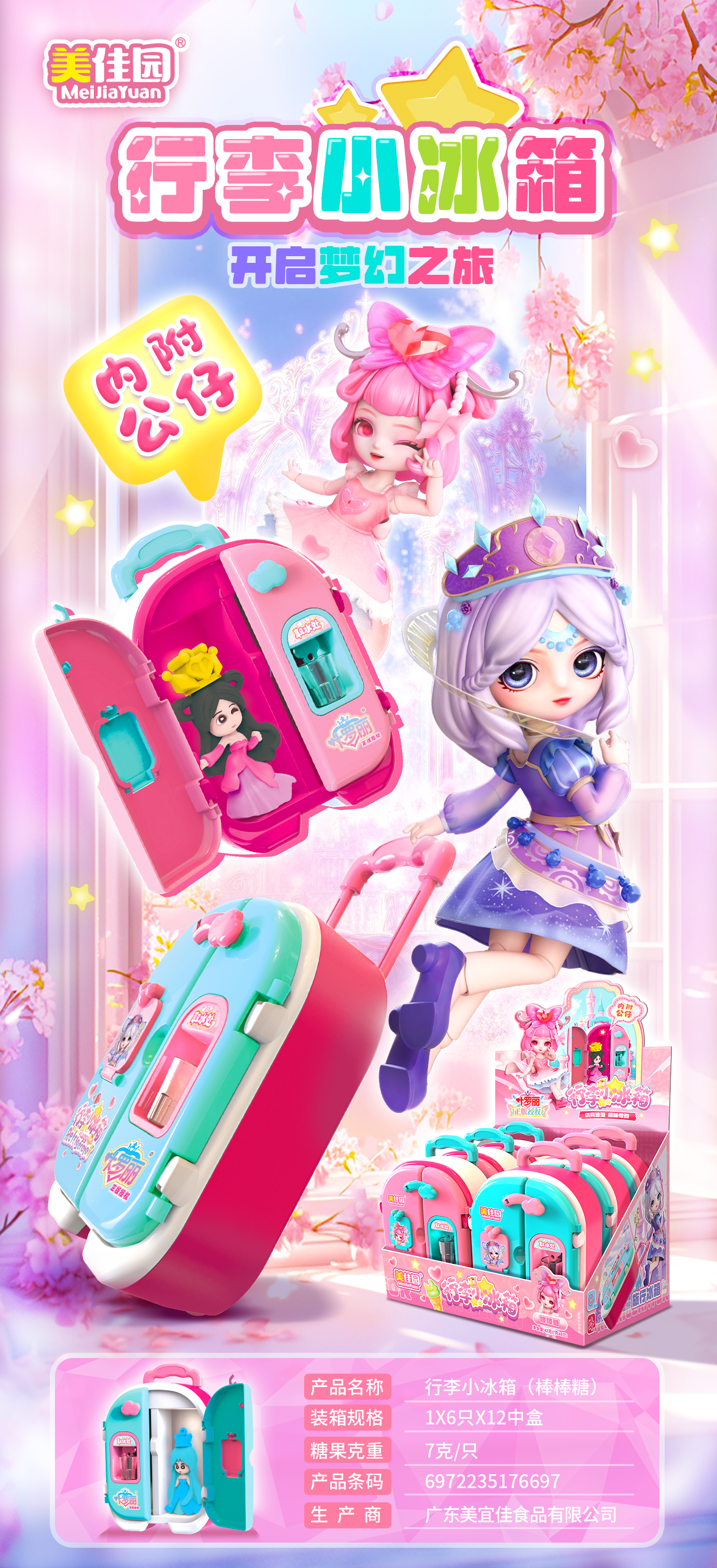
Guangdong Meijiayuan (广东美佳园) provides product information and inquiry support for international B2B buyers through meijiayuanct.com. Specific categories, specifications, and compliance documents are subject to confirmation through direct communication.